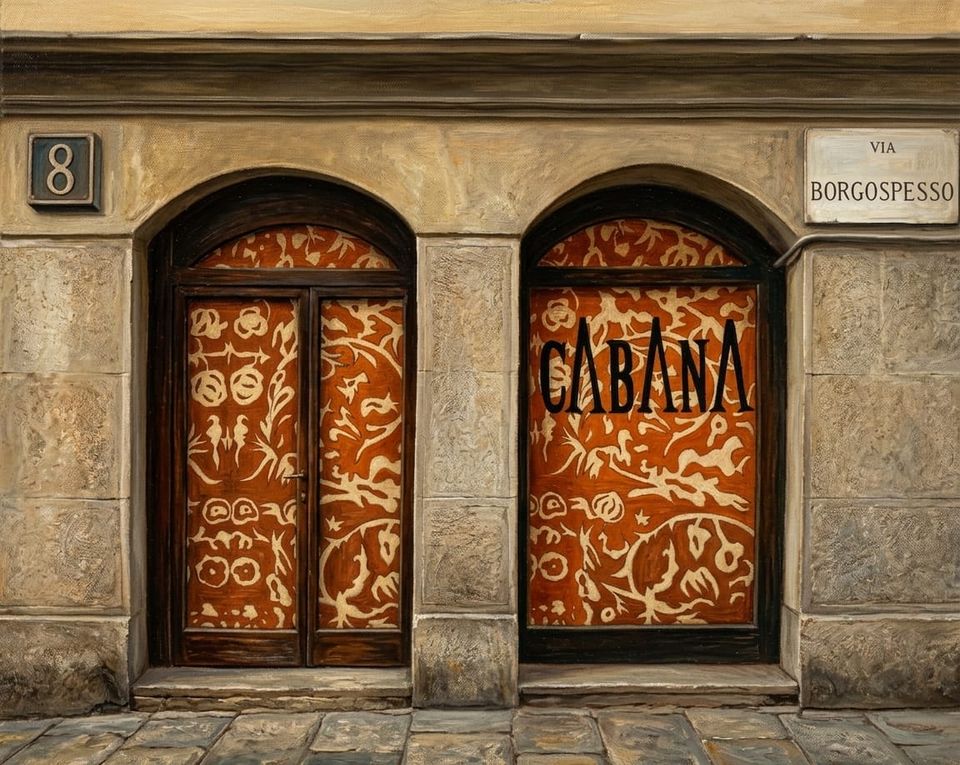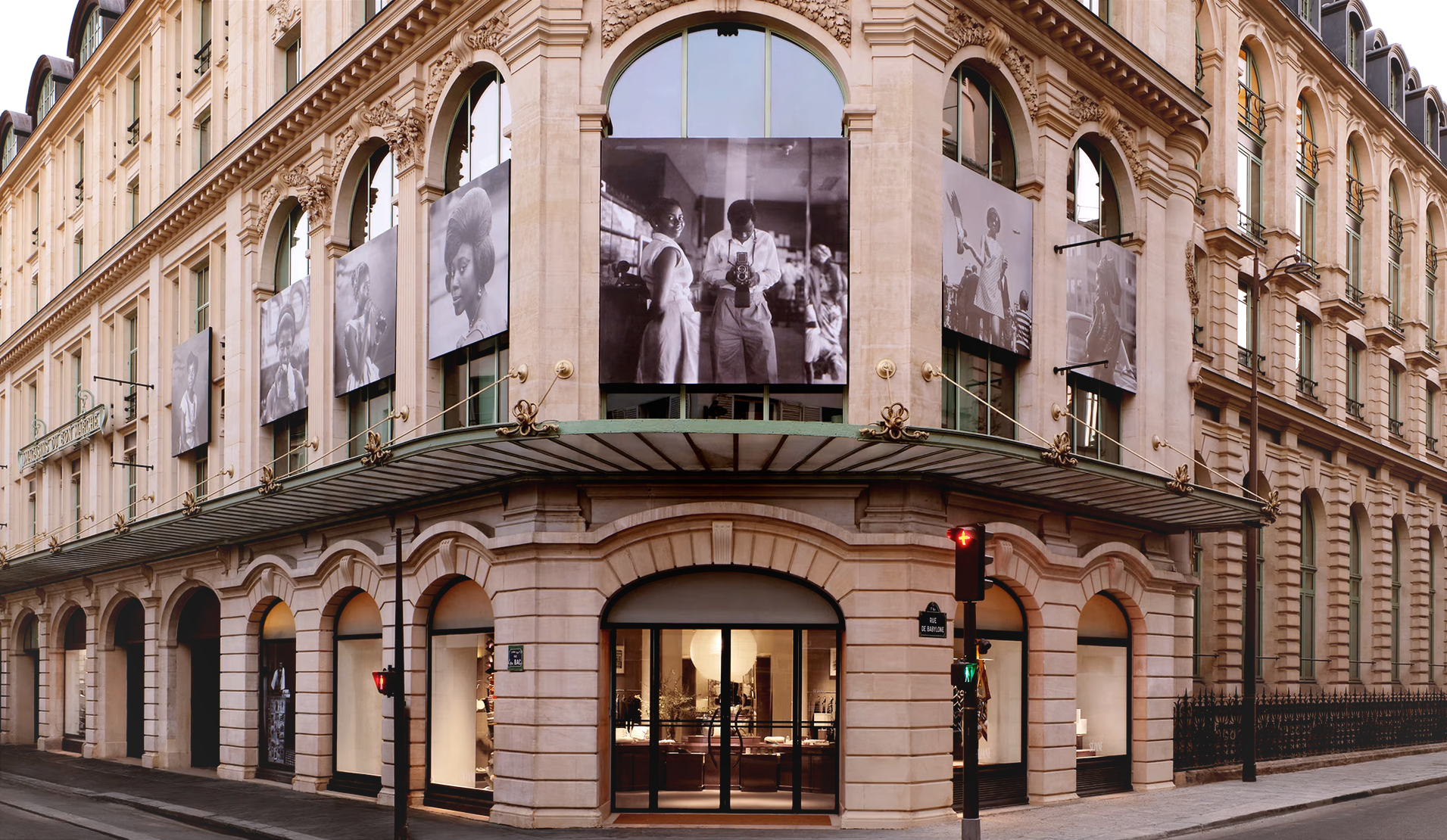

There is a particular kind of Parisian real-estate victory that has nothing to do with square footage: getting the address you've been circling for years. For nearly seven years, Sézane has operated out of the floors above 117 Rue du Bac, in the 7th arrondissement — close enough to the ground floor to feel its pull, never quite able to claim it. This autumn, the waiting resolved itself. The brand has taken over part of the ground level too, three hundred and fifty square metres of it, and filled the space with rather more than clothes.
A Beginning With No Blueprint
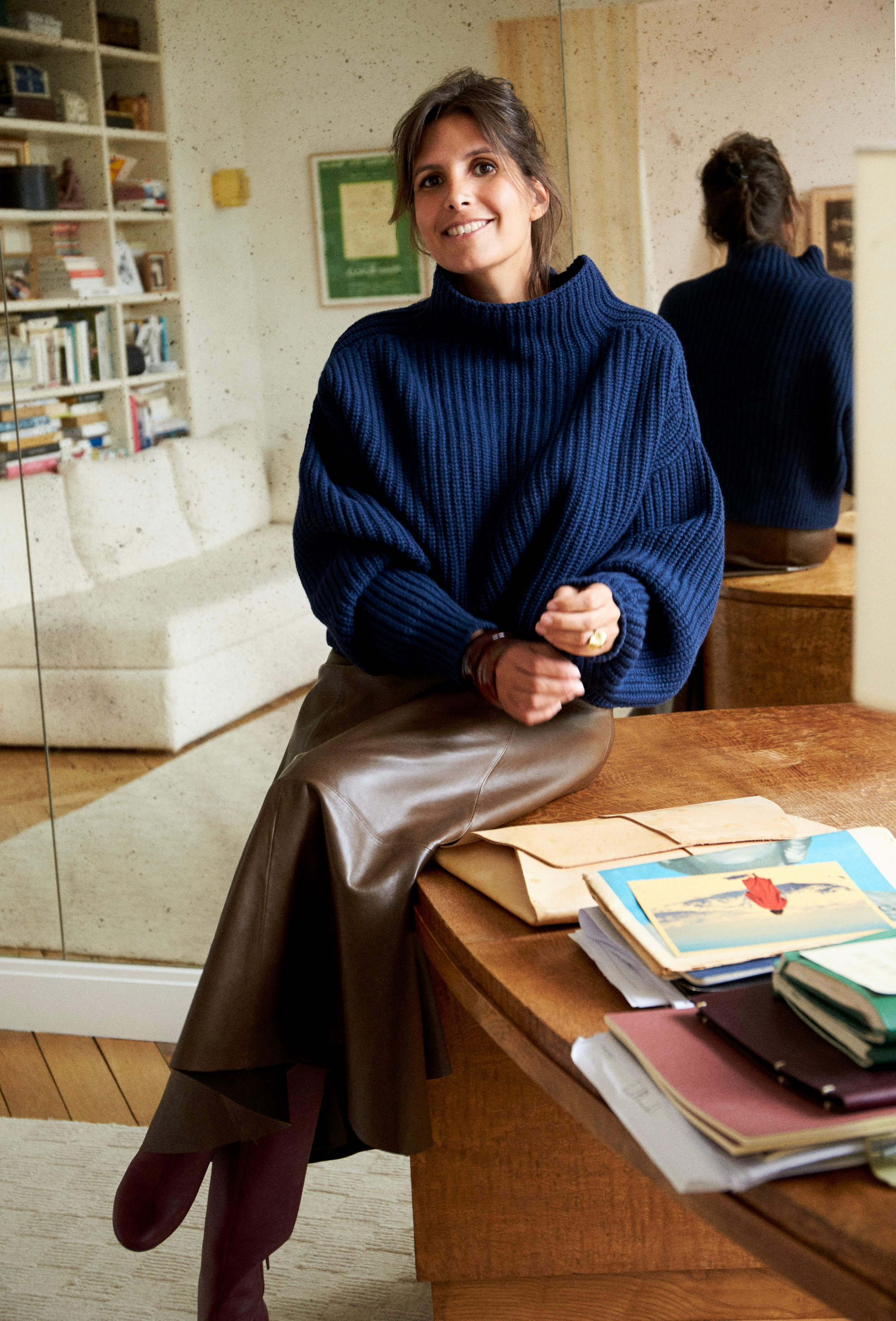
Behind the label is Morgane Sézalory, Sézane's founder, whose own history reads less like a business case study than like the vintage pieces she once sold — assembled, not designed. Born in the Democratic Republic of Congo in 1985, she moved to a suburb outside Paris as a small child. By eighteen, she had earned her baccalauréat as a free candidate — sitting the exam independently, without ever enrolling in the classes that usually precede it. She never went on to design school, business school, or any of the institutions that typically produce a fashion founder.
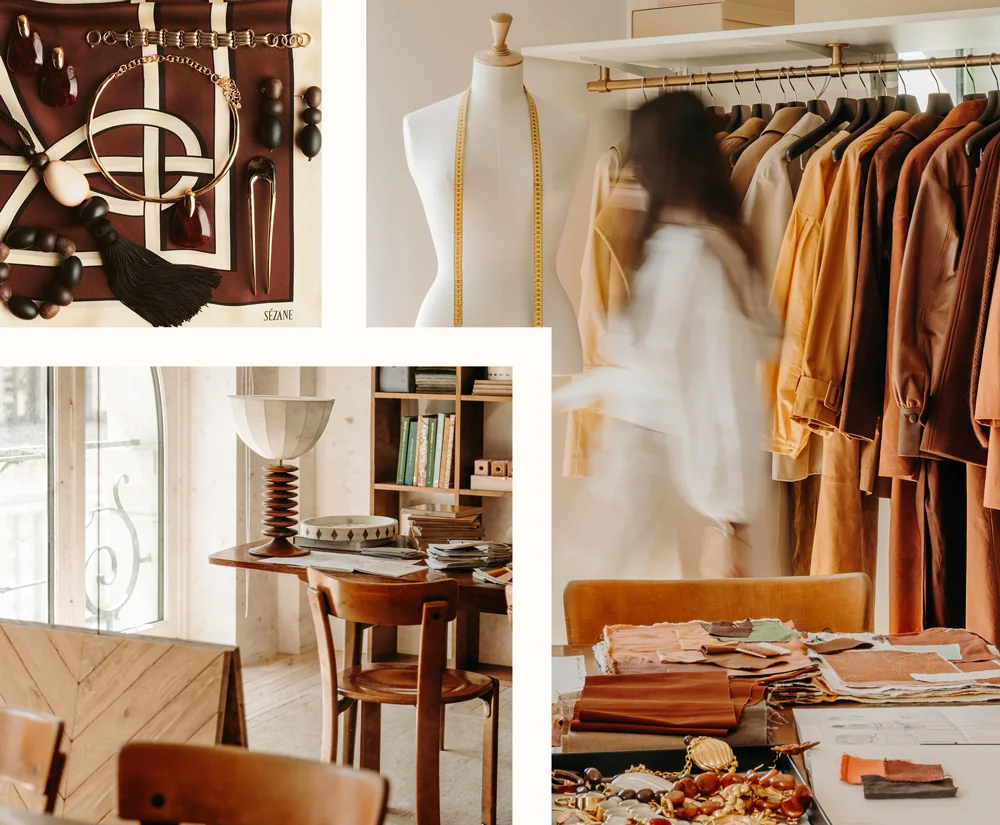
Instead, in 2003, still a teenager, she began reselling personalized vintage clothing on eBay — a hobby with no five-year plan attached. Five years later, that impulse became Les Composantes, a small online boutique built entirely around vintage capsules, curated one find at a time. It would take until 2013 — a full decade after that first eBay listing — for the label to become Sézane, selling ready-to-wear alongside the vintage pieces that had started everything. There was no outside investor smoothing the path, no flagship store to announce its arrival: growth came collection by collection, the same patient, additive logic she now uses to describe the last twenty years as the "construction of a house."
Twenty Years, Told as a House
It's an origin story Sézalory herself keeps returning to, translated into her own metaphor: not a business plan, but the slow construction of a house. First came the foundations, she wrote recently: the vintage pieces and everything those time-worn treasures taught her. Then came the essentials, and the seasonal collections that filled in around them, room by room, until something recognizable as Sézane took shape.
This season's addition — some thirty new silhouettes, released weekly in what the brand calls "chapters" — drew more attention than Sézalory expected. In a letter to customers, she responded with a mix of amusement and mild exasperation: she'd worried the addition might go almost unnoticed, and instead found it being called a "radical turn." Her point was one of proportion, not defense. The classic pieces that built the label's name, she wrote, still make up roughly ninety percent of what Sézane sells, and will keep doing so — what she'd added was a wing, not a renovation. An embroidered blouse and a sharply structured coat, she said, don't have to cancel each other out; a single identity can be worn a hundred different ways.
That such a modest addition could be read as a reinvention says less about the collection than about how closely a brand like Sézane is now being watched.
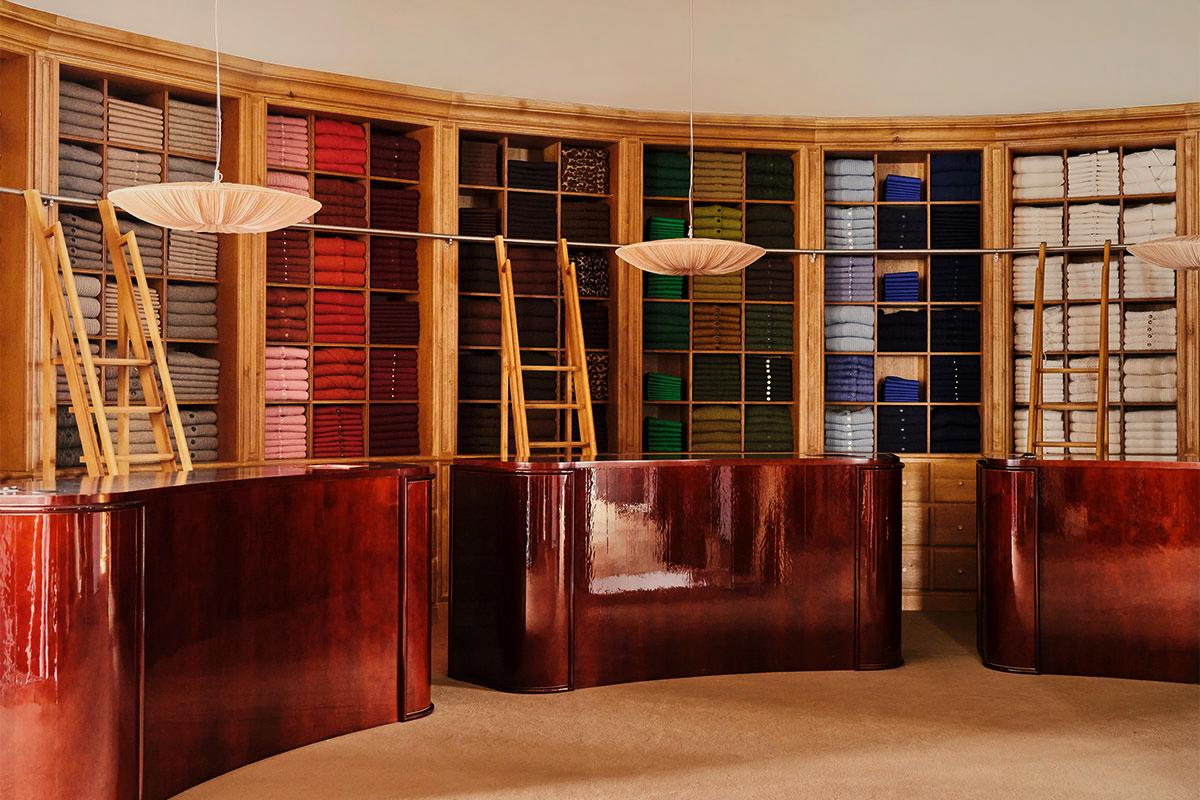
A Shop That Would Rather Be a Living Room
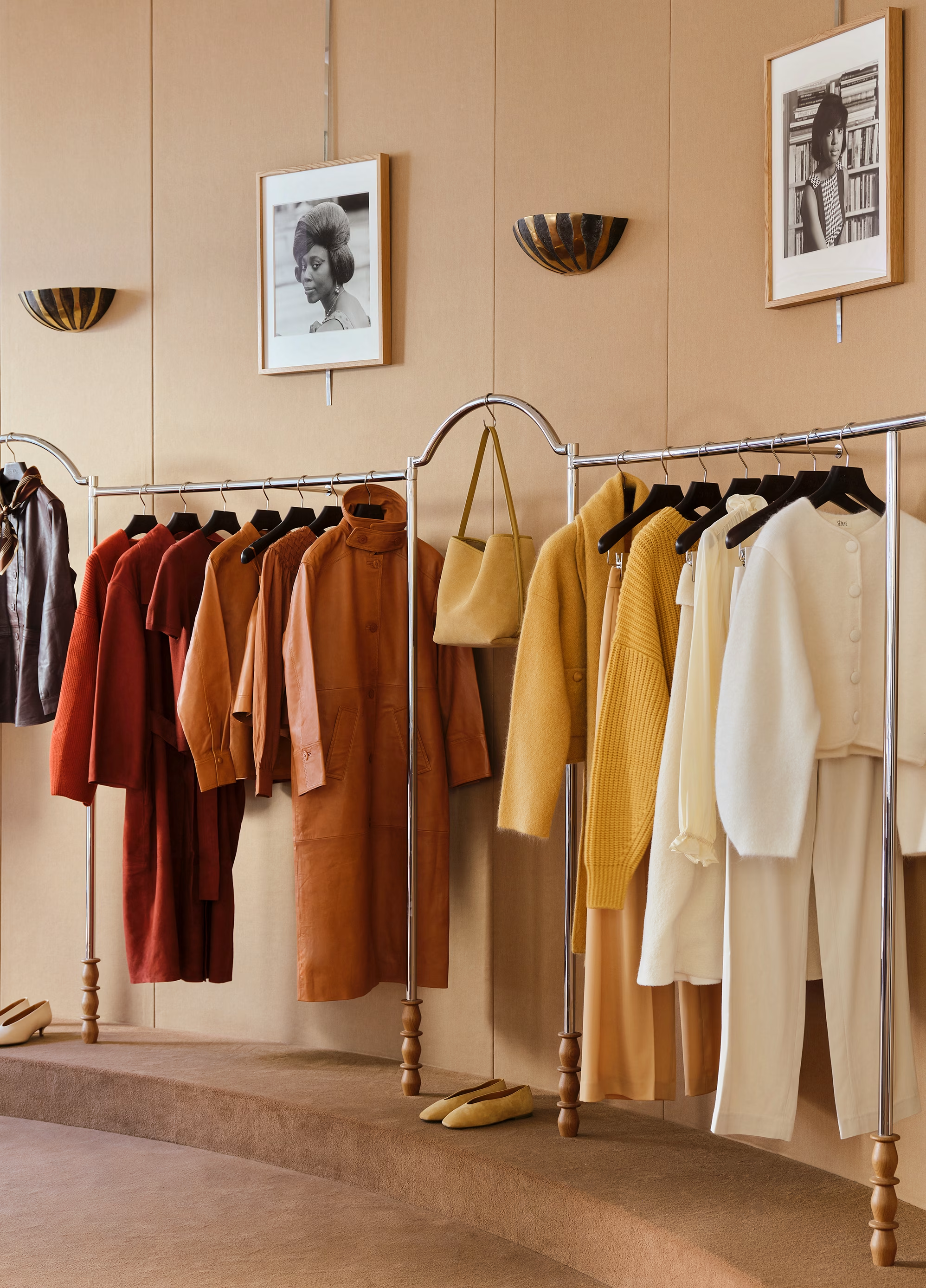
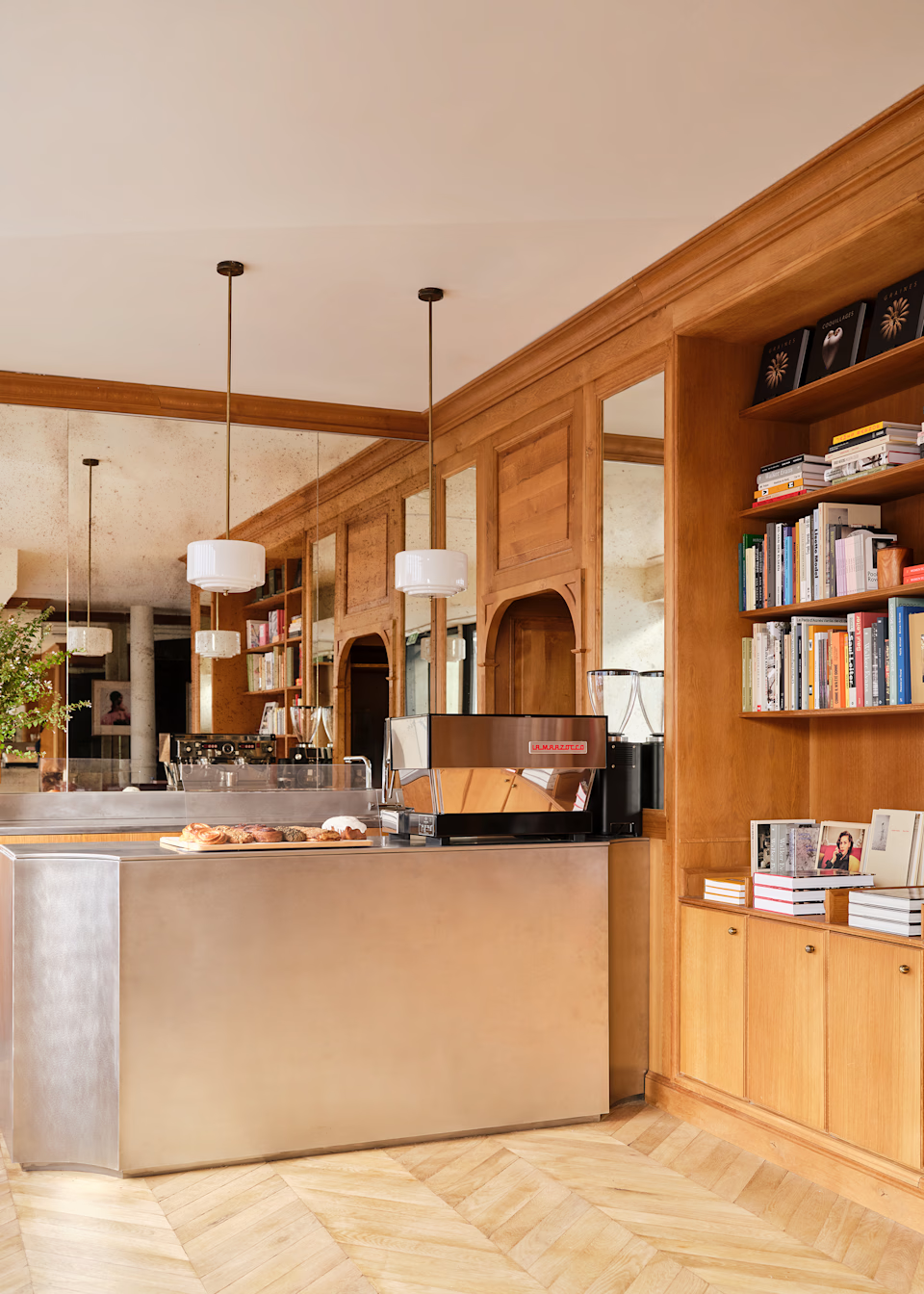
What's opened at 117 Rue du Bac extends a format Sézane has been refining since 2015, when it began calling its stores "Appartements" rather than boutiques — spaces built for wandering rather than efficient shopping, closer to a well-appointed friend's flat than a sales floor. This one leans further into the premise. Alongside the new Fall Collection, there's a café-librairie assembled with two names that carry their own quiet authority in Paris: the venerable Librairie Galignani and the coffee roaster Ten Belles. There's also a photography exhibition devoted to James Barnor, the ninety-seven-year-old photographer whose decades of work — chronicling Ghana, London, independence, youth, elegance — has hung in every Sézane Appartement since the very first one. Sézalory has said the work reminds her that an image can shift a way of seeing, and that a way of seeing can, sometimes, shift the world a little in turn.
Across the street, at 122 Rue du Bac, the label's sister lines, Petit Sézane and Octobre Éditions, are showing their own new collections, so that a single block now holds most of what the Sézane universe currently contains: twenty years of history, from the first vintage selections onward, gathered within sight of one another.
117 rue du Bac, 75007 Paris
Hours
Mon – Sat · 10am – 7:45pm
Sun · 11am – 7:45pm
Open through March 2027. An exclusive tote is offered with purchase to mark the opening.
View on Map →
What Twenty Years Buys You
There's something almost old-fashioned about a fashion brand insisting, at the moment of its expansion, that nothing fundamental has changed — that underneath the new chapters and the weekly rollouts sits the same instinct that once sent a teenager reselling other people's vintage finds on eBay. Asked, in effect, what Sézane is supposed to become next, Sézalory offered no five-year plan. She said only that she hopes never to fully answer the question: that what she wants to protect is the freedom to keep trying, doubting, and starting over, and to go on surprising her customers, and occasionally herself.
That refusal to settle the question in words is, in the end, the real argument of 117 Rue du Bac — made not in a manifesto, but in a bookshop, a coffee counter, and photographs that have hung in every Sézane space since the very first one. Growth, the store seems to say, has never meant becoming a different company, only a slightly larger version of the same one. After seven years spent one floor above the street, the label finally has the ground floor to make that case in person.
Popular
La vie culturelle à Paris
Albert-Kahn Museum and Garden: The Banker Who Collected the World in Colour